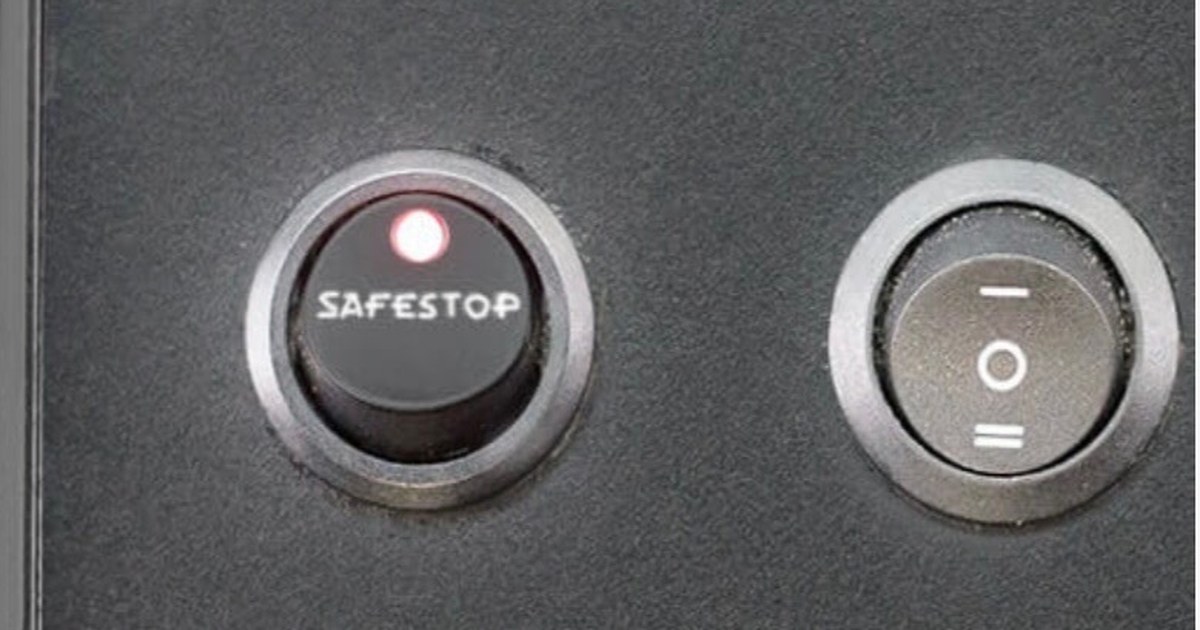
A patrol car idling at a scene. An ambulance running on a call. A plow truck left warming up on a job site. Every one of them is doing its job exactly as intended, and every one of them is a vehicle that can be driven away by whoever gets to the driver’s seat first.
This fall two of those vehicles made the news. On September 3, a suspect in Dayton, Ohio, who had already escaped on foot circled back to a running police cruiser, drove it through a neighborhood, and put it through the front of a house; seven officers and two residents were hurt. On October 15, a contractor’s 2023 F-350 disappeared from a job site in Vermont while the crew worked over a hill. Police found it in the woods the next day, stripped of $15,000 to $20,000 in tools, with the wiring torn apart and the plow half removed.
Different vehicles, different owners, same failure: nothing stopped the vehicle from leaving. Both were preventable with equipment that already exists. This is what that equipment is, where it comes from, and how to make sure it actually gets used.
What an anti-theft idle system does
An anti-theft idle system lets the operator step away while the engine keeps running and everything on the vehicle stays powered: emergency lighting, radios, the computer, the climate control keeping a K9 or a patient cool. What it won’t do is let anyone shift out of Park. Most systems work with the key out of the ignition (or the fob in your pocket); force the shifter and the engine shuts down. One, Tremco’s, works with the key left in: the vehicle locks itself in Park and only a hidden switch releases it.
For a patrol unit, that means an officer can leave the car running at a traffic stop or a scene and know that a suspect who doubles back finds a 5,000-pound paperweight, not a weapon full of agency equipment. For an ambulance or a fire apparatus, it means the rig stays on and climate-controlled with nobody in it. For a work truck, it means the engine can run for the plow or the PTO while the crew is out of sight.
Where it comes from: factory or upfit
From the factory. Ford’s Police Engine Idle feature is standard on the 2027 Police Interceptor Utility and has been since the 2025 model year. On 2020 through 2024 PIUs it was an orderable option under code 47A, so some of your existing units may already have it. The fastest way to find out is to check the window sticker or build sheet, or ask us to pull it by VIN.
From the upfit. For everything that doesn’t come with it from the factory, there are aftermarket systems that do the same job. Secure-Idle, Pro-gard’s SafeStop, and InterMotive’s IdleLock all work key-out: remove the key, the engine runs, the shifter stays locked. Tremco’s Anti-Theft System is built for keyed vehicles and works key-in: it arms itself when the shifter goes into Park, and a hidden floor switch is the only way to release it. Between them they cover Super Duty, Transit, E-Series, ambulance and fire chassis, Tahoes, and older patrol vehicles. Installation is a line item on an upfit, and a small one next to lighting, a console, or a partition.
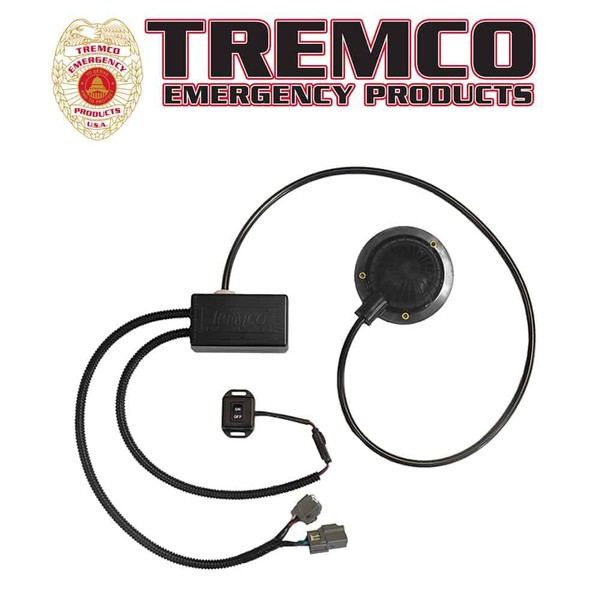
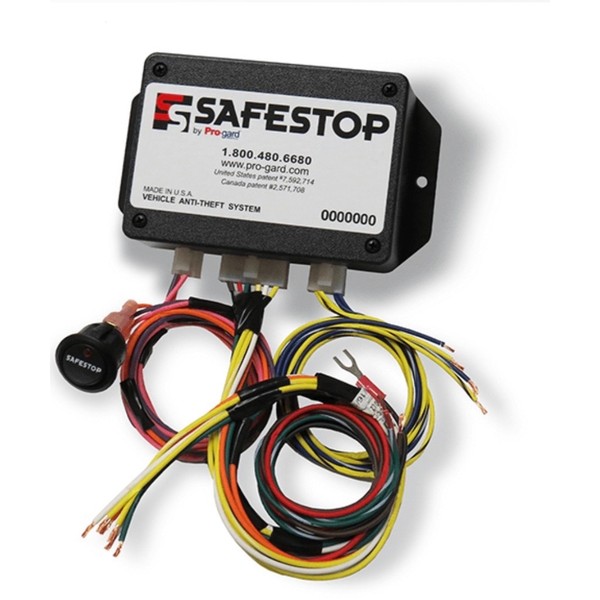
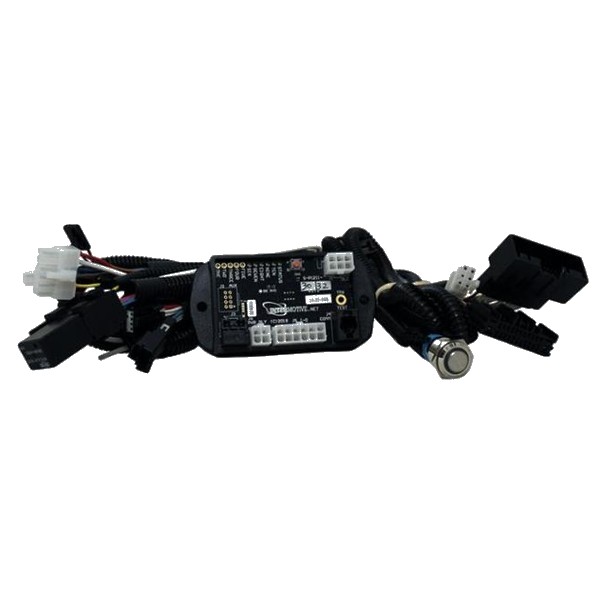
Four of the systems we install. Photos courtesy of Tremco Police Products, Secure-Idle, Pro-gard Products, and InterMotive Vehicle Controls.
We install both kinds, and we don’t have a horse in the race between them. The right answer depends on what’s in your fleet and what you’re ordering next.
Two more layers worth having
An anti-theft system keeps the vehicle from leaving. Two other things decide how bad it is when something still goes wrong.
Know where it is, right now. The Vermont owner called Ford to locate his truck and learned he needed a subpoena, so he waited while police got one. If your fleet is on Ford Pro Telematics, or you’ve added a GPS tracker, the location is on your phone the moment you notice the truck is gone, and the police get it from you. That is the difference between recovering a truck with the tools in it and recovering a truck in the woods.
Know what’s inside it. Locking upfit cabinets, bed boxes, and weapon or equipment racks slow down whoever gets in. A current inventory of what’s in each vehicle, with serial numbers, is what lets police look for it afterward. Two weeks after the Vermont theft, the company was still working out what had been taken. Police can’t search for what nobody can describe.
The equipment is half of it
An anti-theft system that isn’t armed is a running vehicle with a button on the dash. If you manage a fleet, three things worth putting in writing:
- Spec it on every new unit, patrol or not. It’s cheapest at the build and hardest to justify skipping after a loss.
- Train every operator to arm it any time they step out with the engine running, and make the demo part of vehicle orientation.
- Make it policy, and hold people to it the same way you would seat belts or body cameras.
Gordon Graham, who has spent a career teaching risk management to public safety agencies, puts it in four words: predictable is preventable. Vehicle theft from running fleet units is as predictable as it gets.
See it work
We’ll demonstrate the anti-theft options on a unit in our shop, Chandler or Albuquerque, or come out and show you on one of yours. If you’re not sure what’s already on your existing units, bring a VIN or a window sticker and we’ll tell you.
Or call the shop directly: Arizona, Denny Bennett, 602-689-7786. New Mexico, George Trujillo, 505-249-3180.
Sources: Dayton Police Department via Fox 7 Austin; Valley News, October 26, 2026; Ford Police Interceptor Utility specifications, 2021 and 2025 model years.